How to Choose the Right Tokyo Neighbourhood for Your Lifestyle
Choosing where to live in Tokyo is about more than finding an apartment. Each neighbourhood has its own character, but before choosing an area, it helps to understand how Tokyo is organised. The name “Tokyo” can refer to several different geographical areas, and knowing the difference will make it easier to find a neighbourhood that suits your lifestyle, commute and plans.
Understanding Tokyo: From Neighbourhoods to the Greater Tokyo Area
Think of Tokyo in three levels, from the wards within the city to the wider metropolitan region.
Tokyo’s 23 Special Wards: The Urban Core
The 23 special wards, known in Japanese as "ku" form the most densely populated and internationally recognised urban part of Tokyo. This is where you’ll find many of the city’s best-known areas, including Shibuya, Shinjuku, Ginza and Roppongi.
Each ward has its own local government and a distinct character. Some are major commercial and entertainment centres, while others are known for residential streets, universities, parks and a slower pace of life.
For many people looking to live in central Tokyo, the 23 wards are a natural place to start. Their extensive rail networks make it convenient to travel around the city, although the best location for you will depend on where you work, how you like to spend your time and the kind of neighbourhood you want to come home to.
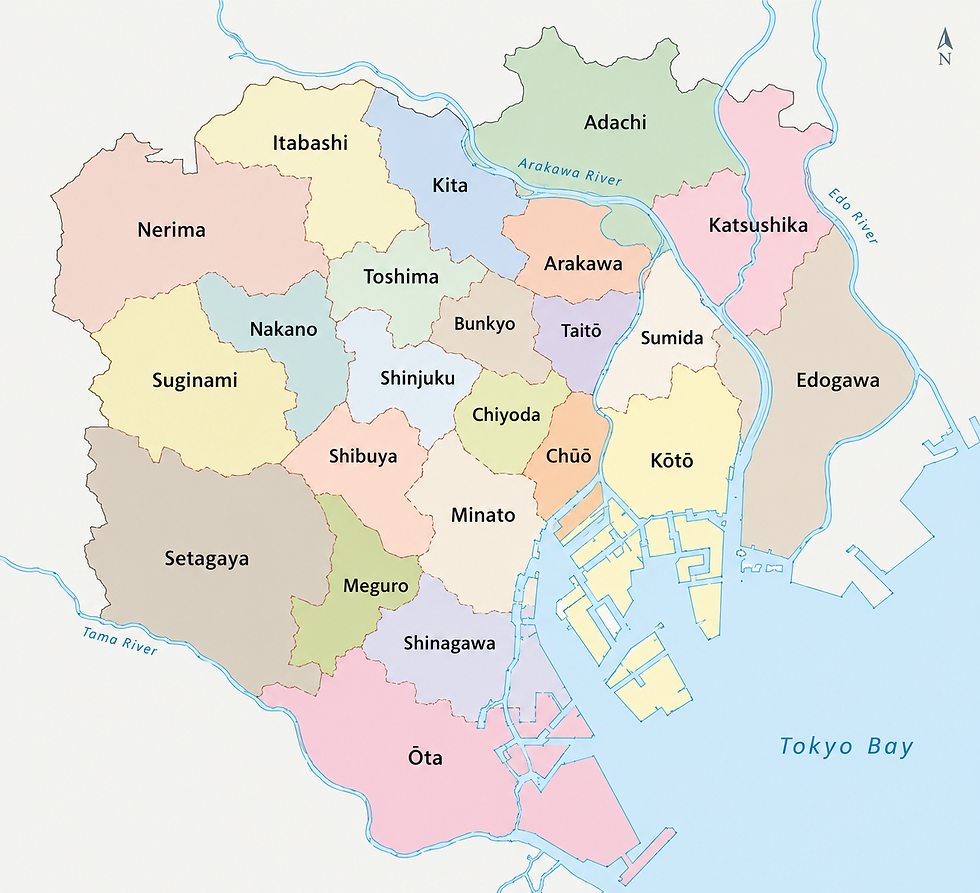
Tokyo’s 23 special wards
Tokyo Metropolis (Tokyo-to): The Wider Prefecture
Tokyo Metropolis is the official administrative region governed by the Tokyo Metropolitan Government. It includes the 23 special wards, the Tama area to the west, and several island groups in the Pacific Ocean.
Beyond the busy urban centre, the Tama area offers a different side of Tokyo, with residential cities, green spaces, mountains and outdoor destinations such as Mount Mitake.
In other words, an address in Tokyo does not necessarily mean living in the city centre. When comparing apartments, check the specific neighbourhood and its transport connections rather than relying on the word “Tokyo” alone.
Greater Tokyo Area (Shutoken): The Metropolitan Region
Greater Tokyo extends beyond Tokyo Metropolis into neighbouring prefectures, particularly Kanagawa, Saitama and Chiba. Millions of people live in these surrounding areas and commute to central Tokyo for work or study.
Living outside the 23 wards can offer a different balance of space, cost and access to nature. However, your daily commute and the location of your usual activities become especially important when deciding where to live.
When searching for accommodation, look beyond the city name. Check the actual address, the nearest station and how long it takes to reach the places you’ll visit most often.
Tokyo Wards to Consider for Your Lifestyle
The most sought-after neighbourhoods for living in Tokyo are often found within the 23 special wards, each with its own distinct character and lifestyle.
Here, we introduce six of Tokyo’s most iconic and desirable wards to consider when choosing where to live, along with the neighbourhoods that make each one unique.
Chiyoda-ku: Central, Connected and Full of History
At the heart of Tokyo, Chiyoda is home to the Imperial Palace, major business districts and some of the city’s most important transport hubs. It combines historic landmarks with modern office towers and excellent rail connections.

Akihabara
Neighbourhoods to know: Marunouchi, Otemachi, Akihabara, Kanda and Jimbocho.
Marunouchi and Otemachi suit those who value proximity to major offices and Tokyo Station. Akihabara offers a lively mix of electronics, anime and gaming culture, while Jimbocho is known for its bookshops and cafés.
Shinjuku-ku: Energy, Convenience and Endless Options
Shinjuku is one of Tokyo’s major commercial and entertainment centres. Around the station, you’ll find department stores, restaurants, nightlife and an extensive rail network connecting you to the rest of the city.

Shinjuku
Neighbourhoods to know: Shinjuku, Kagurazaka, Takadanobaba, Waseda and Yotsuya.
The area around Shinjuku Station is ideal for those who enjoy being close to the action. Kagurazaka offers narrow streets, independent restaurants and a more traditional atmosphere, while Waseda and Takadanobaba have a strong student presence. Yotsuya offers a mix of residential streets and convenient city access.
Meguro-ku: A Local Feel with Plenty to Explore
Meguro is known for its residential neighbourhoods, independent cafés, restaurants and relaxed streets. It offers a balance between city convenience and a more local pace of everyday life.

Jiyugaoka
Neighbourhoods to know: Nakameguro, Jiyugaoka, Gakugei-daigaku and Yutenji.
Nakameguro is particularly popular for its riverside walks, cafés and restaurants. Jiyugaoka has a more laid-back atmosphere with boutiques and patisseries, while Gakugei-daigaku and Yutenji offer local shopping streets and neighbourhood eateries.
Meguro can be a good fit for those who want to explore Tokyo at their own pace without feeling removed from the city.
Chuo-ku: Shopping, Food and Historic Tokyo
Chuo brings together some of Tokyo’s best-known shopping and dining destinations with areas shaped by the city’s commercial history. It is particularly appealing to those who enjoy restaurants, department stores, markets and a central location.

Ginza
Neighbourhoods to know: Ginza, Nihonbashi, Tsukiji, Tsukishima and Kachidoki.
Ginza is known for luxury shopping, galleries and refined dining. Nihonbashi combines historic commerce with modern developments, while Tsukiji remains a favourite for its food stalls and seafood culture. Tsukishima and Kachidoki offer a more residential atmosphere around Tokyo Bay.
Minato-ku: International, Cosmopolitan and Well Connected
Minato is home to international businesses, embassies, upscale shopping and a wide range of restaurants. Its neighbourhoods vary considerably, from lively nightlife districts to quieter residential areas.

Azabudai Hills
Neighbourhoods to know: Roppongi, Azabu-Juban, Azabudai Hills, Akasaka, Aoyama, Shirokane and Toranomon.
Roppongi has a strong international presence, with art museums, restaurants and nightlife. Azabu-Juban is known for its local shopping streets and dining scene, while Aoyama offers design-led boutiques and cafés. Shirokane is more residential, and Toranomon combines modern office developments with convenient city connections.
Minato may suit professionals and international residents who value central access and a cosmopolitan environment, although the atmosphere differs from one neighbourhood to another.
Bunkyo-ku: Green Spaces, History and a Quieter Pace
Bunkyo offers a calmer side of Tokyo, with universities, historic gardens, traditional neighbourhoods and residential streets. It is centrally located but generally feels less hectic than the city’s major entertainment districts.

Hongo
Neighbourhoods to know: Hongo, Korakuen, Myogadani, Nezu and Sendagi.
Korakuen combines shopping and entertainment around Tokyo Dome City with convenient transport connections. Hongo is known for its university atmosphere, while Nezu and Sendagi are part of the Yanesen area, appreciated for their older streets, small shops and traditional character. Myogadani offers residential surroundings and access to green spaces.
For those who value a quieter home environment while remaining connected to central Tokyo, Bunkyo is well worth considering.
A More Flexible Way to Stay in Tokyo
Finding the right neighbourhood is only one part of settling into Tokyo. The type of rental you choose can make a difference too.
Traditional rental apartments can involve screening procedures, contracts and upfront costs. Depending on the property, you may also need to arrange furniture, internet and other essentials before you can comfortably move in.
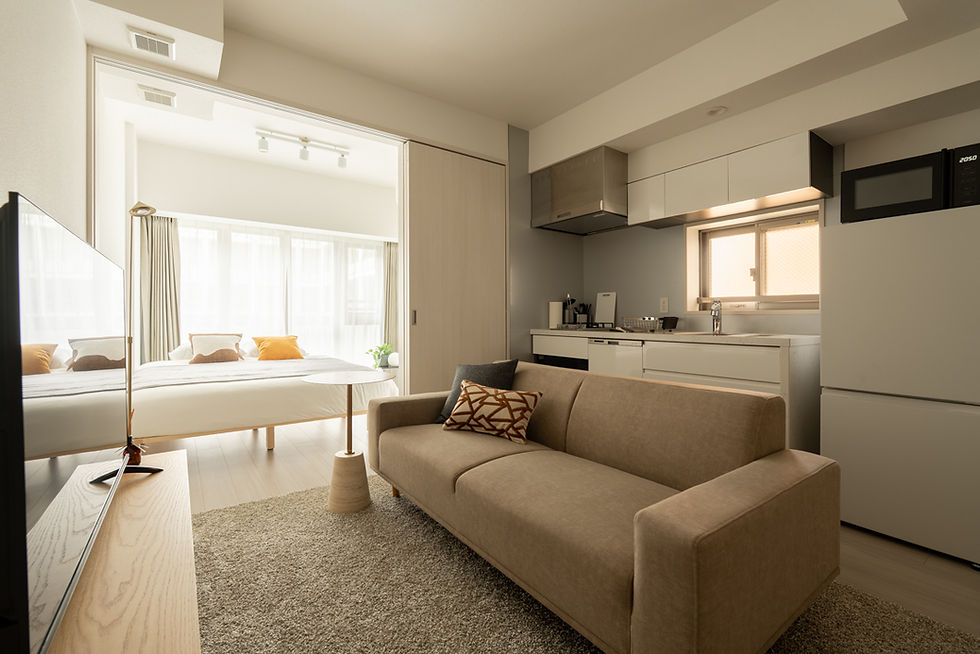
A fully furnished monthly apartment in Tokyo offers a simpler alternative for people who need a ready-to-live-in home without committing to a conventional long-term lease.
At SUMII, our fully furnished apartments are move-in ready, with everyday essentials and high-speed Wi-Fi already in place. Our flexible monthly stays are designed for people relocating to Tokyo, working remotely, studying, travelling for an extended period or simply wanting to experience the city beyond a short holiday.
With rental periods from one to twelve months, you can choose a stay that fits your plans and settle into a neighbourhood that feels right for you.
Explore SUMII’s fully furnished apartments in Tokyo and find a neighbourhood that fits your lifestyle.


Comments