How to Rent a Furnished Apartment in Tokyo as a Foreigner | SUMII
Updated: Jul 14

Moving to Tokyo is an exciting step. Finding somewhere to live, however, can be the first real test of your patience. Japan's rental system operates differently from almost anywhere else in the world, and for foreigners arriving without prior knowledge of local customs, the process can feel slow, expensive, and unnecessarily complicated.
This guide walks through what to expect, what to watch out for, and how to make the process as straightforward as possible.
Why renting in Tokyo is different
In most countries, renting an apartment means finding a place you like, signing a contract, and paying a deposit. In Japan, it goes considerably further. The traditional rental market is built around long-term tenancies, typically two-year contracts, with a set of upfront costs and requirements that catch many newcomers off guard.
These initial fees typically include a security deposit of one to two months rent, key money ranging from zero to two months rent as a non-refundable payment to the landlord, guarantor company fees, a real estate agency fee of up to one month's rent, and fire insurance and administrative costs. Combined, these typically total four to six times your monthly rent.
For a furnished apartment at 300,000 yen per month, that means being prepared to pay upwards of 1,800,000 yen before you even receive your keys. It is one of the first things people wish someone had told them before they started looking.
The guarantor problem
One of the most significant barriers for foreigners is the guarantor requirement. Traditional Japanese rentals require a guarantor, someone who agrees to cover your rent if you default. To be a guarantor, you usually need to be a Japanese person living in Japan with good credit, which is not easy for a foreigner who has just arrived.
Guarantor companies exist as an alternative, but they charge their own fees and add another layer of paperwork to an already lengthy process. For many people arriving on a work transfer or digital nomad visa, this alone is enough to make the traditional route unworkable.

Landlord acceptance
Foreigners often face challenges including language barriers, since contracts are usually in Japanese, high initial costs, and landlord hesitation due to communication concerns.
Nearly 40% of foreigners have faced rental rejections based solely on nationality. Even when a property is listed as foreigner-friendly, that is no guarantee of acceptance. The screening process can take weeks, and there is no certainty at the end of it.
Unfurnished by default
Something many people do not realise until they actually arrive: rental properties with long-term contracts in Japan do not generally come with furniture, home appliances, lighting fixtures, or curtains, and utility costs are not included in the monthly rent.
After paying four to six months of rent upfront, you then need to furnish the apartment from scratch. Bed, sofa, washing machine, refrigerator, kitchen equipment, curtains. Then set up utilities and internet. It is a lot to handle in a new country, often while starting a new job at the same time.
The renewal fee
Even after settling in, the costs keep coming. One of the most overlooked aspects of renting in Japan is the renewal fee, typically required when extending your lease after the initial two-year period and usually equivalent to one month's rent. You are essentially paying a version of key money again just to stay in the same apartment.
A different way to approach it
For many foreigners, particularly those relocating for work, arriving on a digital nomad visa, or planning a stay of one to twelve months, the traditional rental route does not make much sense. The upfront costs are too high, the process too slow, and the commitment longer than most people need.
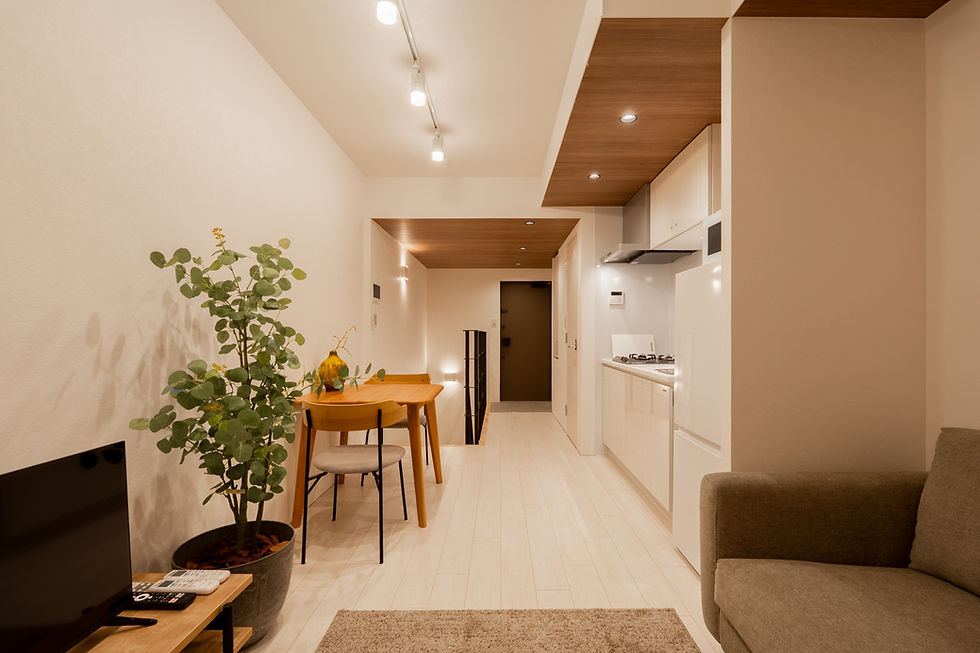
Furnished monthly apartments offer a genuinely different experience. At SUMII, our residences are designed for people who want to arrive in Tokyo and start living, not spend their first weeks managing paperwork, furniture deliveries, and utility accounts.
Every SUMII apartment comes fully furnished and ready to move into from day one. No key money, no guarantor required, no agent fees. Utilities including electricity, gas, water, and high-speed WiFi are all included in one monthly price. Terms run from one month to one year, which for most people relocating to Tokyo is exactly the kind of flexibility that makes the move feel manageable.
What to look for in a furnished apartment
If you are weighing up furnished monthly apartments in Tokyo, these are the things worth confirming before you commit:
What is included in the monthly fee. Make sure utilities and WiFi are covered and that there are no costs sitting in the small print.
Minimum stay. Most furnished apartments in Tokyo have a one-month minimum. Check that the terms work for your timeline.
Guarantor requirements. Some furnished apartments still require one. SUMII does not.
Location and transport. Tokyo neighbourhoods vary a lot in character and commute time. Check the train lines that matter to your daily routine.
English support. Confirm that booking and ongoing communication can be handled in English from start to finish.
To wrap up
Tokyo's traditional rental market was not built with foreign residents in mind. The upfront costs, guarantor system, language barriers, and unfurnished standard all create friction that makes an already significant life change feel harder than it needs to be. Furnished monthly apartments exist to remove those barriers, and for anyone arriving in Tokyo for a stay between one month and one year, they are worth taking seriously.
If you are looking for a fully furnished short-term apartment in Tokyo with flexible monthly terms and transparent pricing, you can view what is currently available here.


Comments